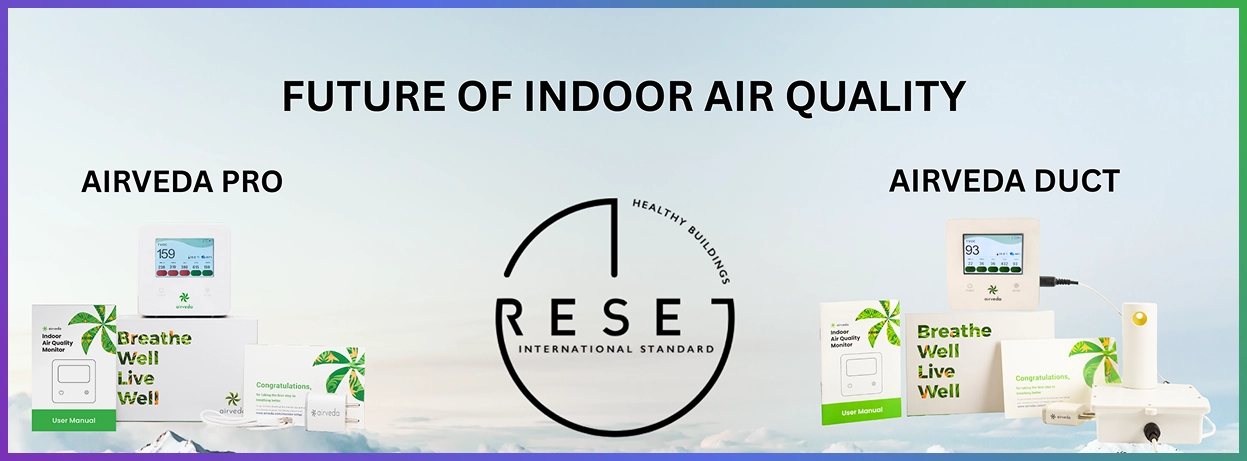
The Future of Indoor Air Quality: RESET Certification & Data Integrity
Introduction
Walk into most modern buildings today and you’ll likely see an indoor air quality monitor quietly displaying numbers which are precise, reassuring, and easy to trust.
But a question we rarely ask is: how reliable are those numbers?
Indoor air monitoring isn’t just about displaying data; it’s about ensuring that data truly reflects the air people breathe. This matters because we spend nearly 90% of our time indoors in offices, schools, hospitals, and home yet indoor air often receives far less attention than outdoor pollution.
At the same time, the rapid rise of monitoring devices has introduced a challenge many organizations overlook: a growing data integrity gap.
Not all sensors deliver reliable, validated measurements. Many lack third-party testing, long-term drift evaluation, or proper calibration standards. Others fail to account for environmental factors like humidity and temperature, which can significantly affect readings.
Over time, this can lead to inconsistent data, incorrect particulate classification, and even false “safe” signals. In practice, that means delayed HVAC responses, weak compliance records, and misleading ESG reporting. Most concerning is the illusion of safety when buildings assume the air is healthy simply because a screen says so.
As awareness around indoor air quality grows, one thing is becoming clear: monitoring alone is not enough data must be trustworthy
RESET: Bringing Measurable Performance to Indoor Air Quality
This growing concern around data reliability is exactly why performance based frameworks such as RESET Certification are gaining global attention.
The RESET Standard is the world’s first certification program focused exclusively on measured indoor air quality and data integrity. Unlike traditional building certifications that evaluate design intent, materials, or ventilation specifications, RESET focuses on something far more dynamic: real-time air quality performance.
Rather than asking whether a building was designed to have healthy air, RESET asks a more immediate question:
Is the air healthy right now and can that be proven through reliable, continuously validated data?
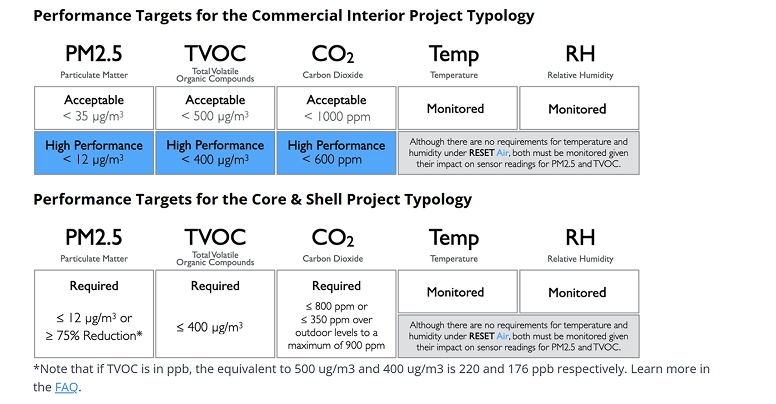
To ensure this level of reliability, RESET evaluates monitoring devices through a rigorous verification framework that includes:
- Independent laboratory testing
- Benchmarking against reference-grade instruments
- Clearly defined measurement accuracy thresholds
- Continuous performance verification
This shifts the conversation from installing sensors to ensuring that the data they produce is accurate, consistent, and defensible.
RESET does not certify marketing claims. It certifies measurement accuracy.
In an environment where buildings increasingly rely on real-time environmental data for operational decisions, that distinction is critical.
If you’re exploring the practical pathway to compliance, we’ve explained the full process step by step in our previous blog: How to get RESET certification for your commercial interiors
Understanding the RESET Performance Grade System
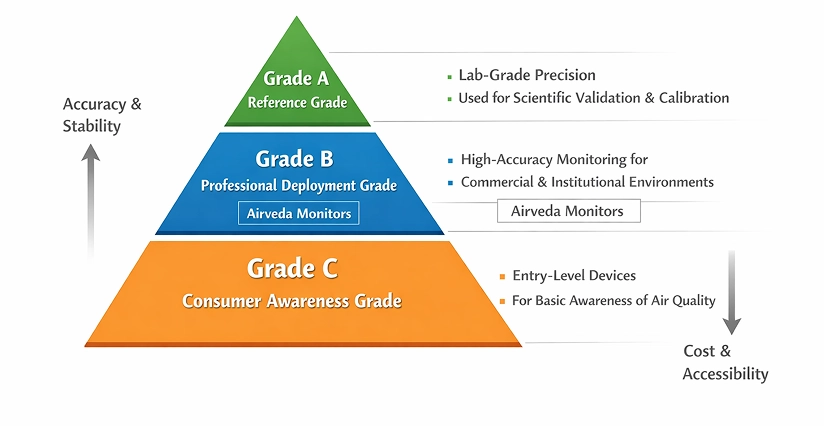
A key element of the RESET framework is its device grading system, which categorizes monitors based on measurement accuracy and reliability.
Grade A — Reference Grade
Near laboratory-grade instruments used primarily for calibration
and validation.
Grade B — Professional Deployment Grade
Designed for high-accuracy, continuous monitoring in real-world
environments such as commercial buildings, airports, healthcare
facilities, and institutional infrastructure. These devices
offer strong long-term stability, minimal sensor drift, and
reliable performance in dynamic indoor conditions.
Airveda monitors operate within this professional-grade category, making them suitable for performance-driven deployments and certification-aligned projects.
Grade C — Consumer Awareness Grade
Entry-level monitors suited for general awareness, but not for
compliance or certification-driven use.
For projects involving green building certifications, ESG reporting, or regulatory compliance, Grade B or higher devices are essential to ensure data credibility.
Airveda’s Role in the RESET Ecosystem
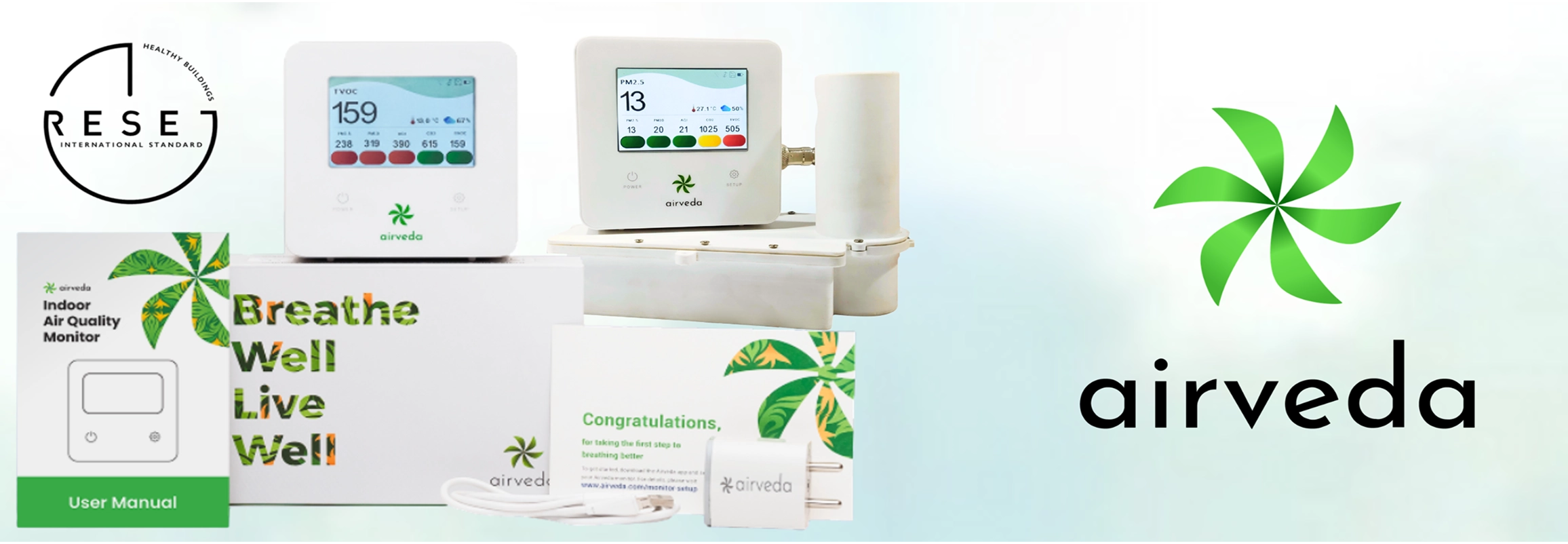
As buildings adopt performance-based standards, the choice of monitoring technology becomes central to successful implementation.
Airveda’s Indoor and Duct air quality monitors are RESET certified, meeting the strict accuracy and data integrity requirements defined by the framework. Airveda is also accredited for deployment in both RESET and WELL projects, enabling seamless alignment with global healthy building standards.
For different stakeholders, this creates tangible value:
- Developers & sustainability consultants gain confidence that their monitoring infrastructure meets internationally recognized standards.
- Facility managers can rely on validated data for day-to-day operational decisions.
- Organizations pursuing ESG goals benefit from credible, audit-ready environmental reporting.
By aligning with globally recognized frameworks, Airveda enables buildings to move from basic monitoring to verifiable air quality management.
Airveda Indoor vs Duct Monitoring: Designed for Complete Visibility
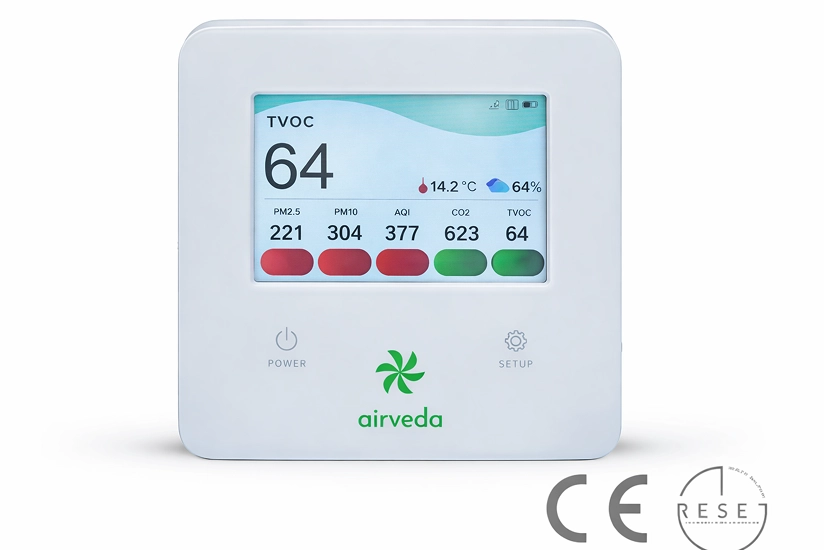
Airveda Indoor Monitors
- Measures air quality in Indoor environment
- Tracks parameters like PM2.5, PM10, CO₂, TVOCs, temperature, and humidity
- Designed for real-time occupant exposure insights
- Enables wellness tracking, compliance dashboards, and ESG reporting
- Ideal for offices, hospitals, schools, and commercial interiors
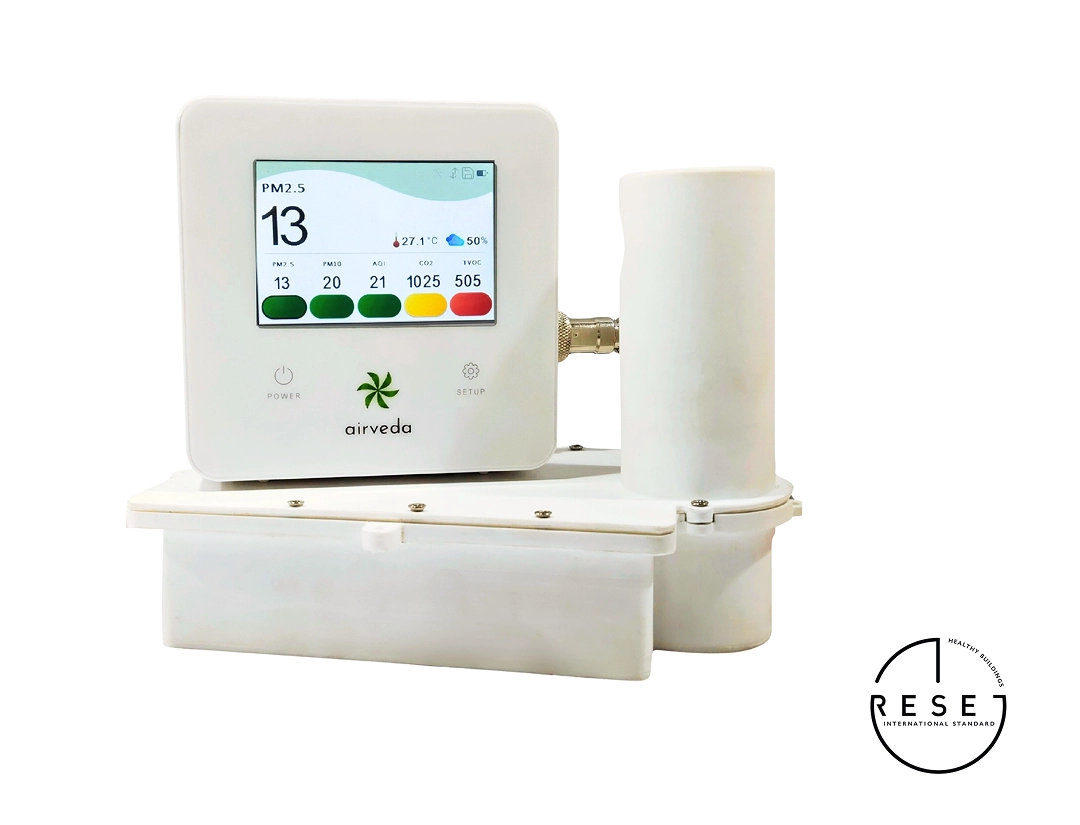
Airveda Duct Monitors
- Modular design with a compact sensor unit mounted in the duct, suitable even for space-constrained installations
- External base unit with display for real-time visibility at eye level
- Flexible placement across HVAC systems:
- Before and after filters to evaluate filtration efficiency
- At fresh air intake to monitor ambient air quality
- At outlet ducts to assess room sealing performance and CO₂ buildup
- Enable continuous validation of HVAC performance—not just air measurement
- Support multiple communication protocols including Wi-Fi, GSM, Modbus IP, and Ethernet
Building a Closed-Loop Air Quality Monitoring Framework
Airveda occupies a unique position in the Indian market by offering both RESET-certified indoor monitors and RESET-certified duct monitors. You can read more about this milestone in our previous blog: Airveda is now RESET certified and accredited for use in both RESET and WELL projects.
This dual capability enables a closed-loop air quality framework.
Indoor monitors track what occupants breathe, while duct monitors validate the air supplied through HVAC systems. Together, they ensure that air quality is maintained from source to space enabling faster interventions and clear visibility into system performance.
Instead of passive dashboards displaying isolated data points, this approach enables actionable insights for building operations, supporting more responsive ventilation strategies and continuous environmental optimization.
The Shift From Intent to Evidence
Indoor air quality is one of the most fundamental aspects of building health, yet it has historically been evaluated through design assumptions rather than measured outcomes.
That paradigm is now changing.
Frameworks like RESET represent a broader shift across the built environment: a transition from sustainability defined by intent to sustainability verified through measurable performance.
For building owners, developers, and facility teams, the implications are clear. Environmental quality can no longer rely solely on design specifications or one-time certifications. It must be continuously measured, validated, and transparently communicated.
Workplace wellness, residential health, and ESG accountability are increasingly influencing how buildings are designed and operated, making this transition no longer aspirational, but expected.
The real question is no longer whether you are monitoring air quality, but whether you can trust the data behind it.

About the author
Priya Kumar is an Airveda team member passionate about air quality, sustainability, and public health. She contributes to content that helps raise awareness around air pollution and healthier indoor and outdoor environments.