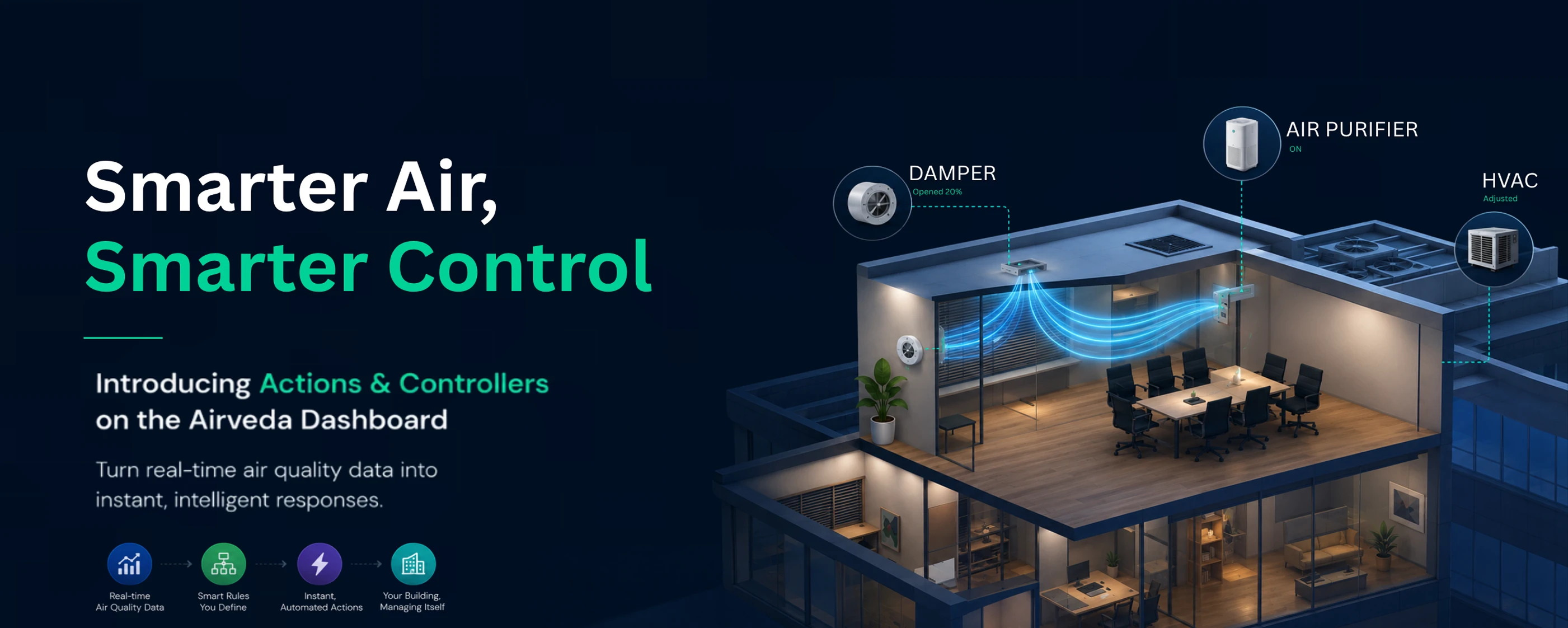
Smarter Air, Smarter Control: Introducing Actions & Controllers
It’s May. The AC hasn’t turned off in weeks. Windows are shut, blinds are drawn, and the cold coffee on your desk is the only thing getting you through the afternoon. You think it’s the heat wearing you down, but it’s not. It’s the air in the room you’ve been sealed inside all day.
With rooms closed and no fresh air coming in, CO₂ builds up faster than most people realize. The monitor on the wall sees it happening. The dashboard lights up. The alert fires.
And then it waits.
Not because anyone missed the alert. Not because anyone was lazy or careless. But because knowing something is wrong and being able to fix it instantly are two very different things and most buildings were only built for the first one.
Here’s something that should bother you more than it probably does: the gap between “we detected it” and “we did something about it” is where indoor air quality fails people. Every response still depends on a human in the loop, someone has to notice the alert, understand it, decide what to do, and then actually do it. By the time that chain plays out, a meeting room may have already spent 45 minutes above 1,800 ppm CO₂.
That’s not a monitoring problem. That’s a management problem.
Knowing your air quality in real time is not the same as managing it in real time. And for buildings working toward WELL, RESET, or LEED standards, reacting faster is no longer enough. Consistent indoor air quality requires removing the need to react at all.
That’s the shift from monitoring to automation. And that’s exactly what we’ve built.
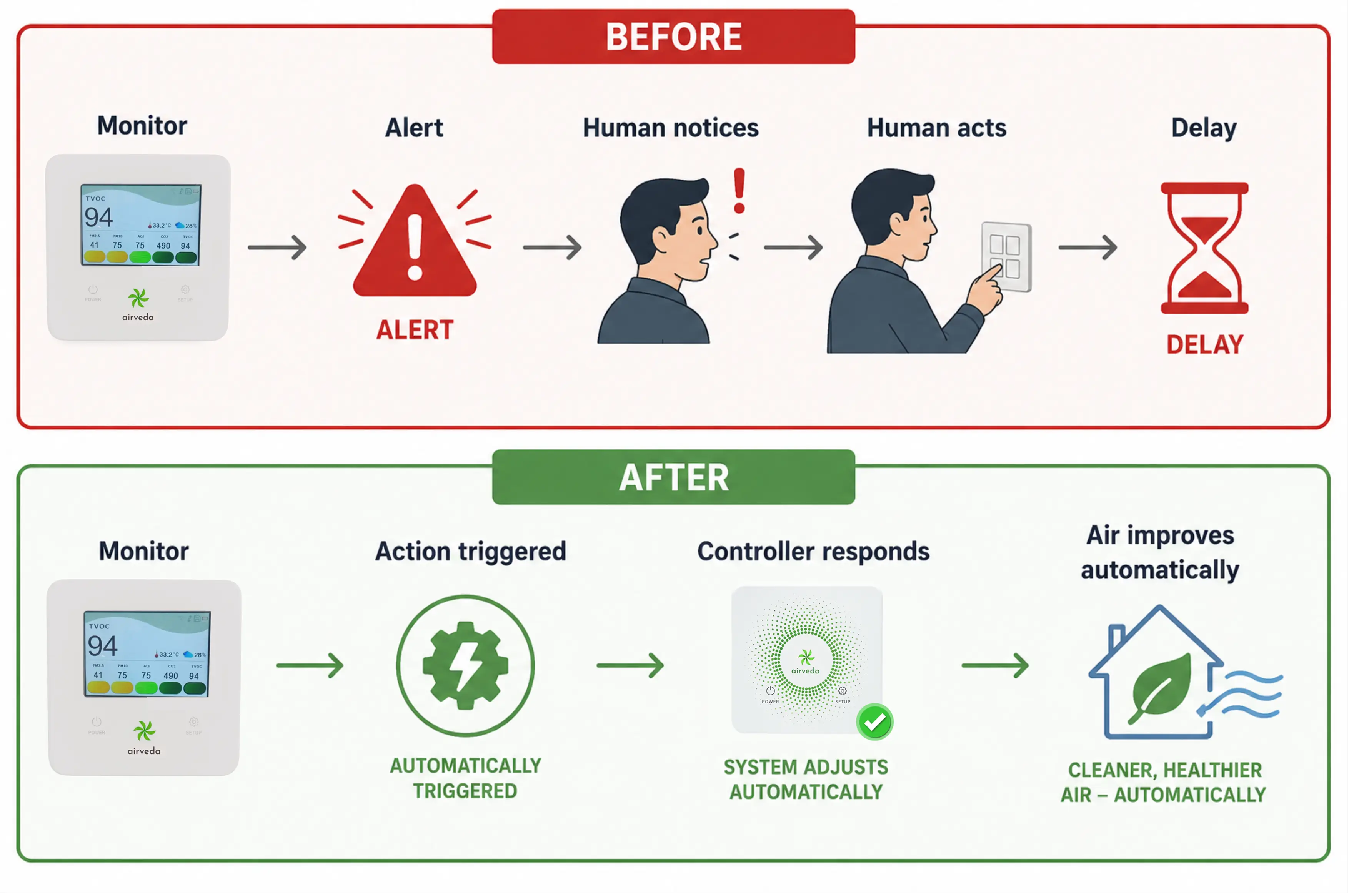
Introducing Actions & Controllers
Actions & Controllers is Airveda's new automation layer, one that turns your real-time air quality data into instant, intelligent responses. No waiting. No manual intervention. Just your building, managing itself.
At its core, it's simple: you define the rules, your building follows them.
Controllers basically acts as the bridge between Airveda’s dashboard and physical systems like dampers, HVAC systems, and air purifiers.
You can use Actions in two ways:
- Automate your environment — Trigger physical devices like air purifiers, dampers, or HVAC systems the moment conditions are met.
- Visualize before you deploy — Monitor and validate how automation would behave on your dashboard, before connecting any physical hardware.
Think of it as the "if this, then that" logic layer sitting on top of your live air quality data.
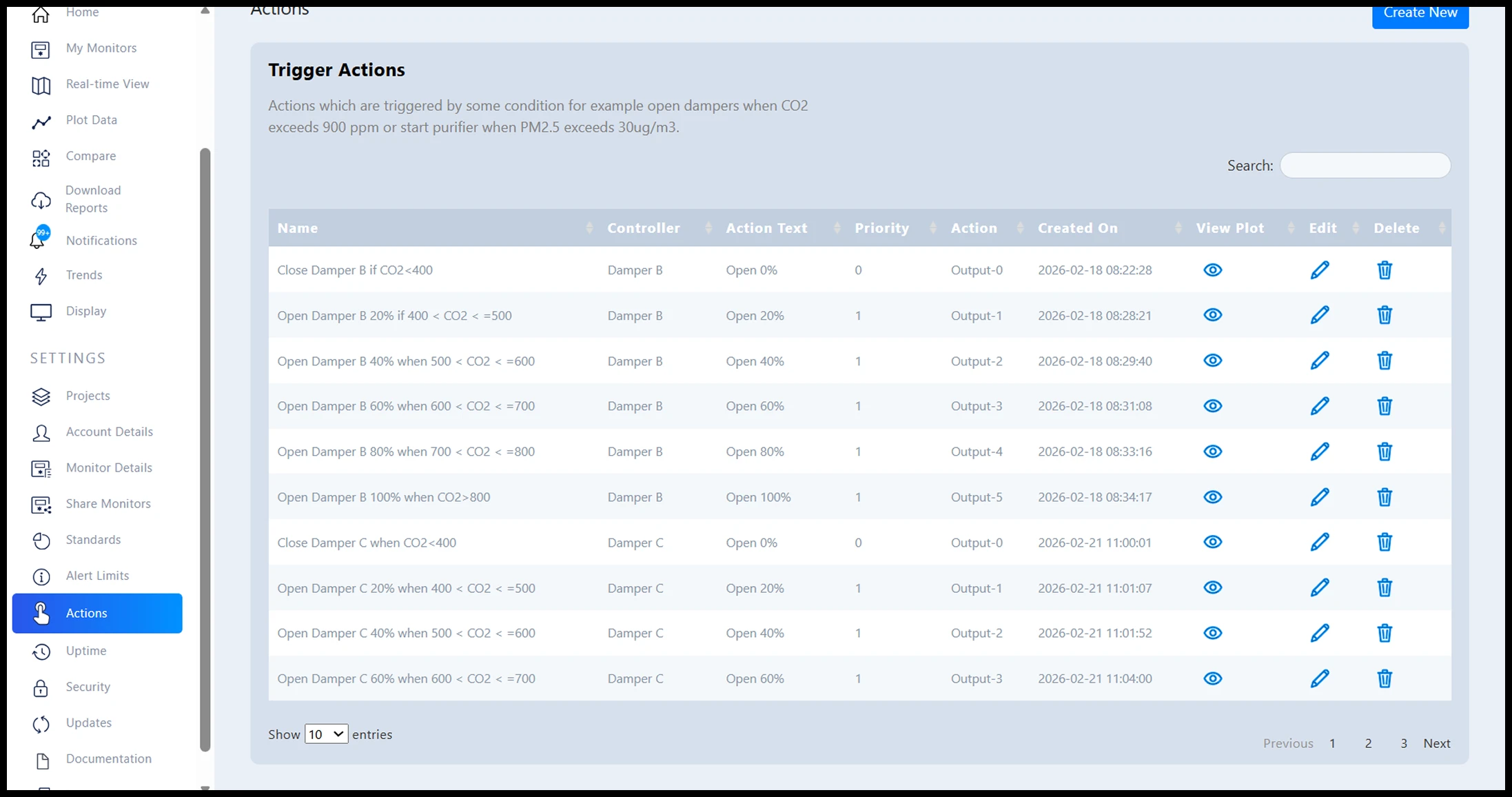
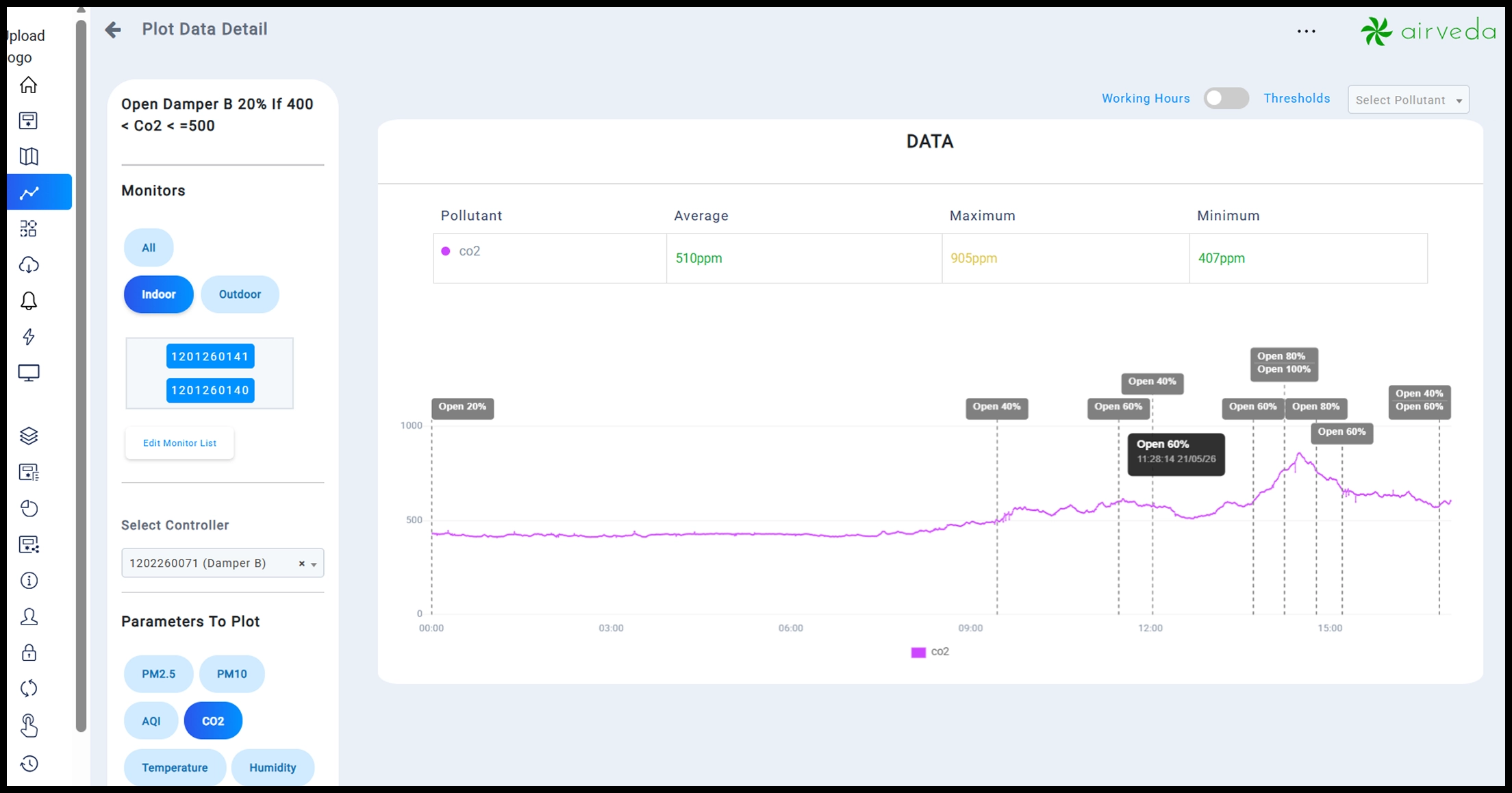
How Actions & Controllers Work
Every Action is built around a condition. When that condition is met, something happens, a device turns on, a damper opens, a purifier shuts off.
Conditions can be simple or sophisticated. You can:
- combine multiple air quality parameters using AND / OR logic
- apply rules across individual monitors or entire zones
- use maximum, minimum, or averaged readings
- factor in outdoor air quality
- create time-based responses
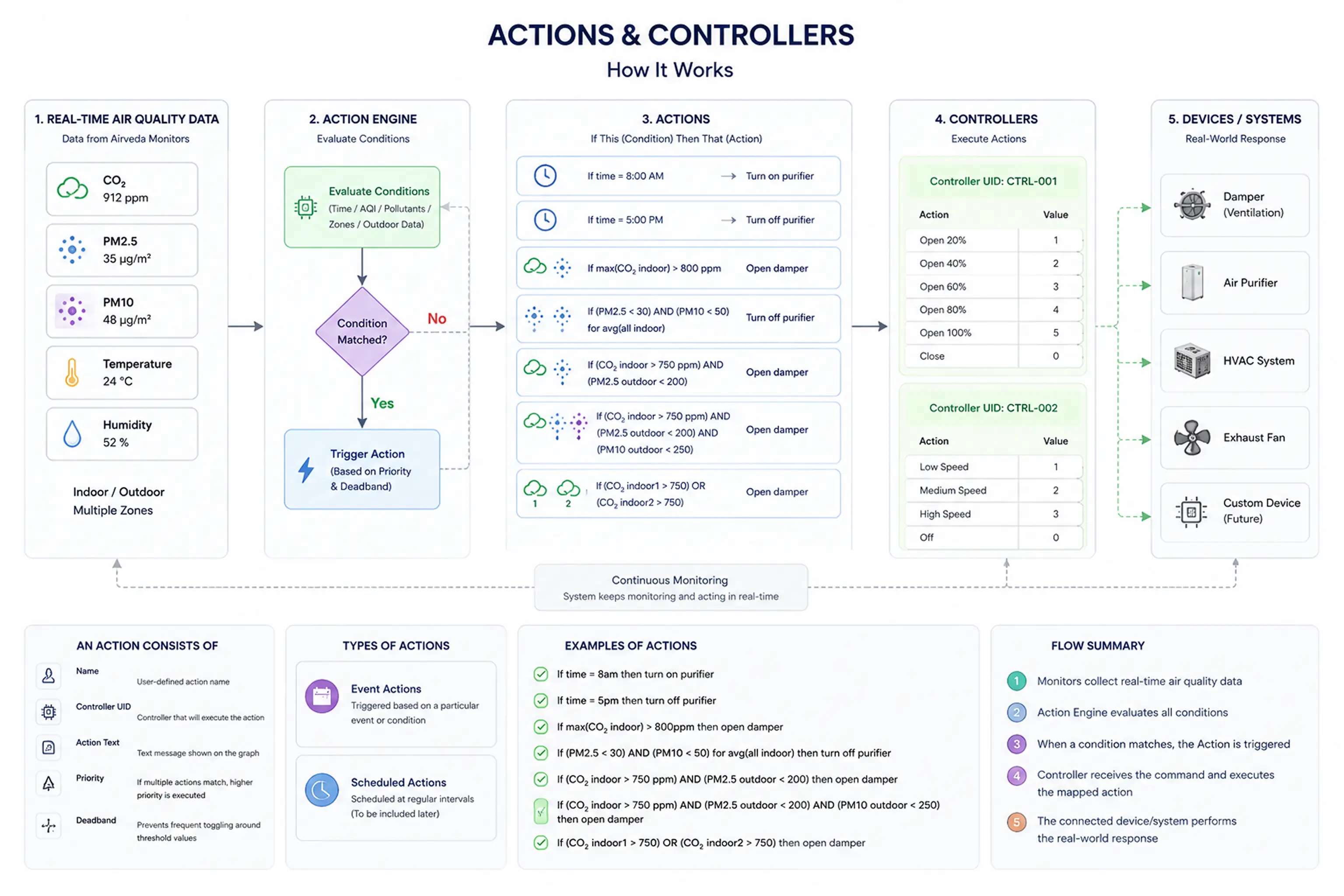
How Automation Happens in Real Time:
- Airveda monitors detect a change in air quality
- Our servers evaluate predefined conditions
- Matching Actions are triggered automatically
- Controllers receive instructions instantly
- Connected devices respond in real time
- Events are logged and visualized on the dashboard
Here's what that looks like in practice:
| Condition (Example) | Action |
|---|---|
| Time = 8:00 AM | Turn on purifier |
| Indoor CO₂ > 800 ppm (max across monitors) | Open damper |
| PM2.5 < 30 AND PM10 < 50 (avg. all indoor) | Turn off purifier |
| CO₂ indoor > 120 ppm AND outdoor PM2.5 < 150 | Open damper |
| CO₂ Zone 1 > 1200 OR CO₂ Zone 2 > 1500 | Open damper |
This kind of multi-parameter, multi-zone logic makes Actions especially powerful for large offices, schools, hospitals, and smart buildings where different spaces have different thresholds and demand different responses.
Automation That Thinks in Zones, Not Just Numbers
What makes Controllers genuinely powerful for complex buildings is that they don’t just respond to a single sensor they can respond to your entire environment.
Set conditions across multiple parameters. Apply logic across zones. Average readings across monitors. Factor in outdoor air quality before deciding whether to open a damper. A large hospital floor, a school with a dozen classrooms, a multi-zone office can each space can have its own rules, its own thresholds, its own automated response.
The result is a building that isn’t just monitored. It’s managed consistently, verifiably, across every corner of it.
Why This Matters for Certification and Beyond
Look, monitoring tools have gotten very good. Real-time data, historical trends, AQI scoring across dozens of parameters and Airveda already does all of that, and we’re proud of it.
But here’s the uncomfortable truth we kept coming back to: Data without action is just a more detailed way of watching problems happen.
If you’re managing a building against WELL, RESET, or LEED standards, you don’t get credit for knowing your air quality was bad.
You get credit for keeping it good consistently, verifiably, over time.
That requires automation. It requires a system that doesn’t depend on a human being in the right place at the right time.
Actions & Controllers is our answer to that. It's not a feature for features' sake. It's the thing that closes the loop between “we know” and “we did something about it.”
What's Coming Next
This is version one. Scheduled Actions (time-based rules), recurring automations are coming soon. Deeper controller integrations are in progress. We're building toward something bigger: a full air-quality-native building automation layer that doesn't require a separate PMS platform bolted on top.
More on that soon.
Already have an Airveda account? Head to the Actions section in your dashboard and start building.
New here? Visit airveda.com to learn more.
Questions, feedback, or something broke? Reach us at info@airveda.com we read everything.
Breathe smarter. Act smarter. Airveda.

About the author
Priya Kumar is an Airveda team member passionate about air quality, sustainability, and public health. She contributes to content that helps raise awareness around air pollution and healthier indoor and outdoor environments.